Why BJP Battled Hard for Bengal: The Legacy of Syama Prasad Mookerjee
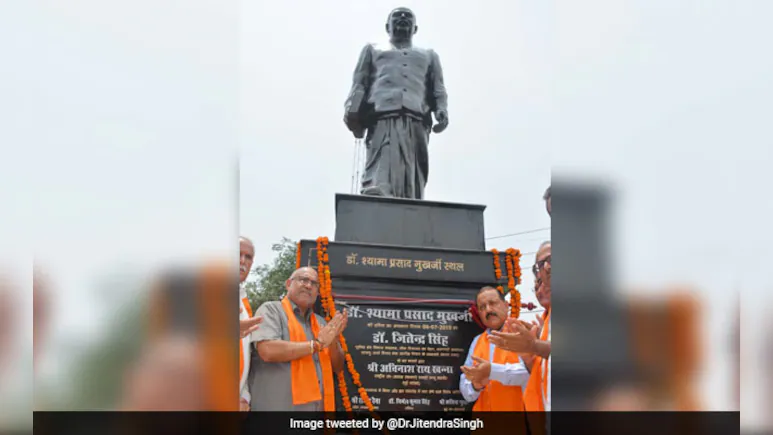
For many people in Kolkata, SP Mukherjee Road is simply one of the city’s busiest roads, connecting major neighbourhoods like Kalighat and Bhabanipur, where Mamata Banerjee lives and represents. But behind the road’s familiar name lies a historical figure whose legacy still shapes Indian politics today — Syama Prasad Mookerjee.
For the BJP, Mookerjee is far more than a name on a street sign. He is regarded as one of the ideological founders of the party and a key reason why Bengal has always held deep political importance for them.
A Son of Bengal’s Intellectual Legacy
Syama Prasad Mookerjee was the son of Ashutosh Mukherjee, one of Bengal’s most celebrated personalities, often called the Tiger of Bengal. Ashutosh was a scholar, lawyer, judge of the Calcutta High Court, Vice Chancellor of Calcutta University, and a driving force behind institutions like what later became Jadavpur University.
Following in his father’s footsteps, Syama Prasad entered public life in 1929 through the Congress and later became active in the Bengal Legislative Assembly. In 1939, he joined the Hindu Mahasabha and rose quickly to lead its Bengal unit.
From Nehru’s Cabinet to Founding a New Political Movement
After Independence, Mookerjee joined Jawaharlal Nehru’s first Cabinet. However, ideological differences led him to resign in 1950. Soon after, with support from the Rashtriya Swayamsevak Sangh (RSS), he launched the Bharatiya Jan Sangh in 1951.
That party later evolved into today’s Bharatiya Janata Party (BJP). When the Jan Sangh won three parliamentary seats in 1952, the BJP sees it as the first step in its long journey toward becoming India’s ruling party.
Why Bengal Matters So Much to BJP
During Bengal elections, BJP leaders frequently invoke Syama Prasad Mookerjee to highlight the party’s Bengali roots and counter accusations that it is an “outsider” force in the state.
Party leaders often credit him for advocating that parts of Bengal and Punjab remain within India during Partition. For BJP, winning Bengal is not just electoral success — it is symbolic, tied to one of its founding icons.
BJP’s Rise in Bengal
The BJP’s growth in West Bengal has been dramatic:
- 2016 Assembly Election: 3 seats, around 10% vote share
- 2021 Assembly Election: 77 seats, around 38% vote share
- Current Election Trends: Crossed the majority mark of 148 seats in the 294-member Assembly
For the BJP, Bengal has long been the final major frontier in eastern India. Its recent rise there reflects years of effort, strategy, and historical messaging rooted in the memory of Syama Prasad Mookerjee.
More Than Politics
In many ways, this story is not just about election numbers. It is about how history, identity, and legacy continue to influence present-day politics. For Kolkata residents, SP Mukherjee Road may remain just another busy road. But for the BJP, it represents the road that led them to Bengal.
News source: Information for this article was gathered from a variety of reliable news outlets.