Vivek Nagpal Back In Spotlight As Old Financial Allegations Resurface Amid Fresh Media Attention
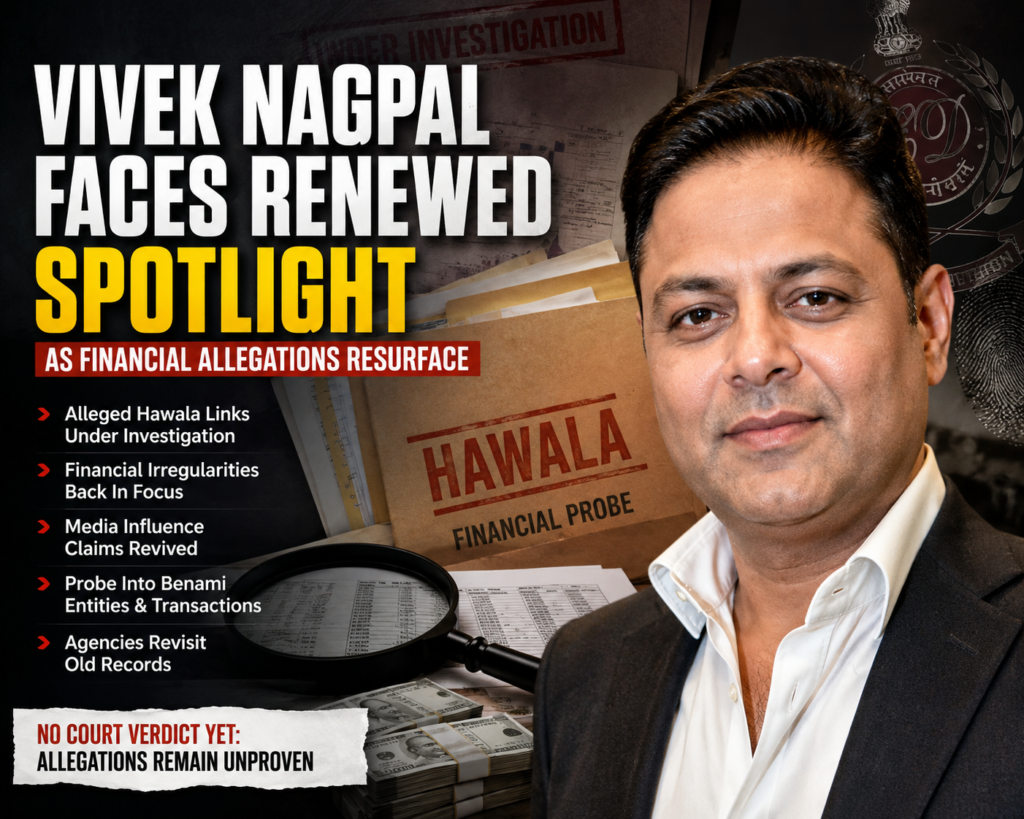
Mumbai , May 22 Businessman Vivek Nagpal has once again come under the public scanner after older allegations linked to financial irregularities and suspected hawala operations resurfaced through fresh media reports and online discussions. The renewed focus has reignited debate around corporate transparency, financial accountability, and the influence of powerful business networks.
According to multiple reports and social media conversations, the controversy centres around claims that Nagpal was allegedly connected to financial structures and business entities that had earlier attracted the attention of investigative agencies. Several reports suggest that company transactions, ownership records, and financial dealings linked to his business network were part of previous examinations in suspected cases of financial misconduct.
The latest wave of attention gained momentum after investigative stories revisited claims of hawala-style money transfers, benami entities, and layered financial arrangements that allegedly helped move funds outside traditional banking channels. These reports have triggered fresh discussions among journalists, investigators, and the public, with many revisiting old documents and records related to companies reportedly linked to Nagpal.
Sources familiar with past investigations claim that some of these financial arrangements were considered highly complex, involving multiple intermediaries, shell companies, and possible offshore connections. Such structures, experts say, often make it difficult for authorities to trace the exact origin and movement of funds, especially when transactions cross borders.
Beyond the financial angle, the controversy has also brought back allegations concerning media influence. Some reports have claimed that individuals within influential corporate and political circles often attempt to manage narratives, shape public perception, or limit negative coverage through strategic media relationships. While these allegations have added fuel to the current debate, they remain unverified and have not been conclusively proven in any court of law.
Legal experts observing the matter have stressed that public discussion and investigative reports should not be confused with judicial findings. They note that while allegations may generate public interest, criminal liability can only be established through due legal process, official investigations, and court proceedings.
The resurfacing of these claims has also reopened broader conversations about how difficult it remains for enforcement agencies to investigate hawala and unofficial financial networks. Experts point out that such systems often operate beyond formal banking structures, making them harder to monitor and regulate.
As the discussion intensifies across digital platforms, many users are calling for greater transparency and clarity regarding the allegations. Others argue that if any wrongdoing is established, it would once again highlight the urgent need for stronger financial oversight and accountability in India’s corporate ecosystem.
For now, there is no fresh public court ruling or official conviction directly linked to the latest claims surrounding Vivek Nagpal. The current controversy remains largely driven by resurfaced reports, historical allegations, and renewed media attention.
With the speed of digital media allowing old controversies to return to the spotlight within hours, the Vivek Nagpal case has become another example of how unresolved questions from the past can quickly dominate public discourse once again.
News source: Information for this article was gathered from a variety of reliable news outlets.