

Squamish on Edge: Canadian Town Near Vancouver Braces for Wildfire Evacuation
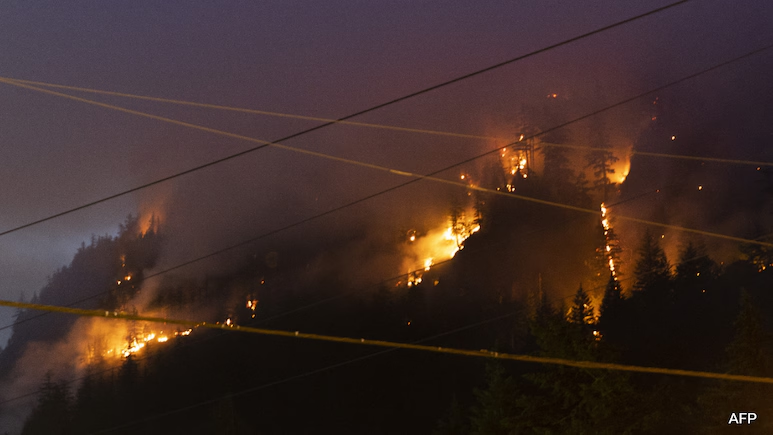
Squamish, British Columbia — Just 64 kilometers north of Vancouver, the peaceful mountain town of Squamish is now on high alert as wildfires inch dangerously close to its borders. Late Tuesday, British Columbia’s emergency management agency issued a warning: some residents must be ready to evacuate at a moment’s notice.
A state of emergency has been declared in the district, highlighting the growing intensity of Canada’s wildfire season—one that is already outpacing recent years in scale and destruction.
For many residents, the threat feels surreal.
“I’ve never seen a fire in Squamish, at all, ever,” said Max Whittenburg, a 19-year-old skateboard coach. “We’ve packed up most of our things just in case. We’re ready to go if we need to.”
His friend Luke Procter, also 19, said he’s been staying up late and waking early to help his family prepare. “We hooked up the trailer to our Jeep. Everything’s ready—just in case.”
Experts are deeply concerned. Fires along the coast, such as the one threatening Squamish, are unusual and alarming.
“These are areas that did not traditionally burn,” said Marc-Andre Parisien, a researcher with the Canadian Forest Service. “We’re now seeing more and more of them.”
While these coastal fires are generally less intense than those raging inland, the frequency is troubling. Canada’s wildfire season is already off to a devastating start:
- Over 3.3 million hectares of land have burned—an area larger than Belgium.
- As of Tuesday, more than 220 wildfires were active across the country, with half out of control.
- Smoke from these fires has even reached Europe, crossing the Atlantic Ocean.
Other parts of Canada are reeling too. Saskatchewan and Manitoba faced emergency-level wildfires in late May. Though Saskatchewan is now seeing a slight improvement, northern Alberta, British Columbia, and Ontario continue to battle mega fires.
The worsening fire seasons are linked to climate change, with Canada warming at twice the global average. Experts cite shorter winters, reduced snowpack, and earlier summers as key drivers of the crisis.
Environment Canada has forecast above-normal summer temperatures, coupled with already dry spring conditions, which are expected to increase wildfire risks in the coming weeks.
Adding to the challenge: over a dozen new fires are igniting daily, many caused by human activity or lightning strikes.
For towns like Squamish, nestled in nature and once untouched by such disasters, the message is clear: be prepared, stay informed, and act fast if needed.
News Source : Information for this article was gathered from a variety of reliable news outlets.