

Who Is Iran’s Interim Supreme Leader? Meet Ayatollah Alireza Arafi
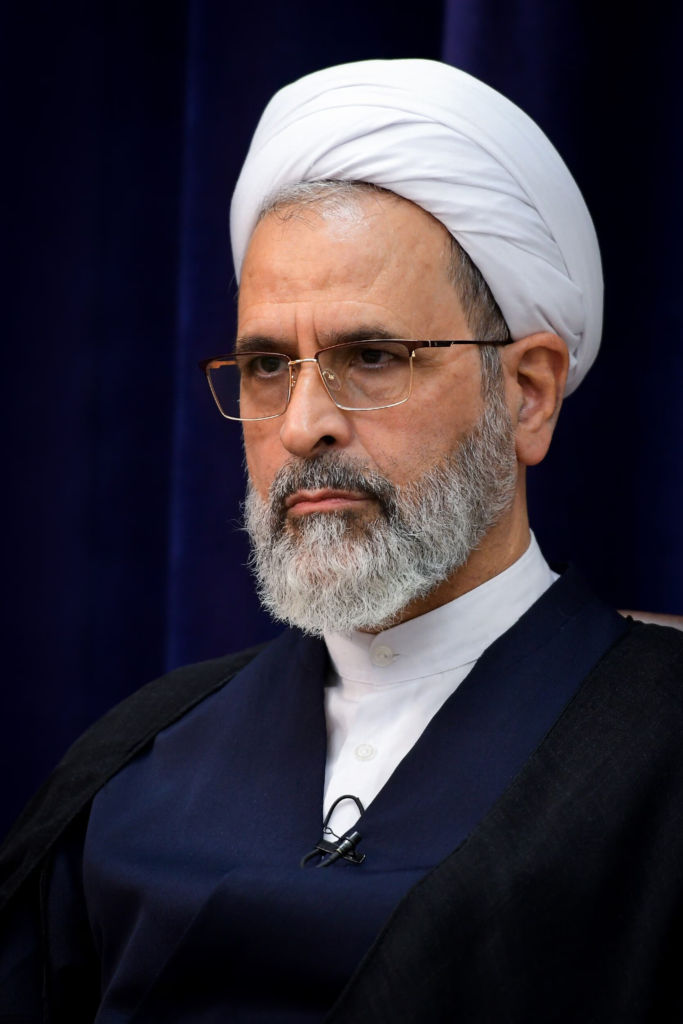
Iran has appointed senior cleric Alireza Arafi as a jurist member of the country’s interim Leadership Council following the reported assassination of Supreme Leader Ali Khamenei.
The temporary three-member council will assume the powers and responsibilities of the Supreme Leader until the Assembly of Experts selects a permanent successor. According to reports, the council also includes Iranian President Masoud Pezeshkian and Chief Justice Gholamhossein Mohseni Ejei.
Iranian parliamentary speaker Mohammad Bagher Qalibaf said the country had long prepared contingency plans for such a situation, including the possibility of leadership transition after Khamenei.
Early Life And Education
Arafi was born in 1959 in Meybod, a town in Iran’s central Yazd Province, into a religious family. His father, Mohammad Ibrahim Arafi, was a respected cleric who was reportedly close to Ruhollah Khomeini, the founder of the Islamic Republic.
At the age of 11, Arafi moved to Qom, Iran’s main religious center, to pursue advanced Islamic studies. There he trained under prominent scholars and eventually earned the rank of mujtahid, which allows him to independently interpret Islamic law. His academic focus includes Islamic jurisprudence and philosophy, and he is known to speak Arabic and English fluently.
Career In Iran’s Religious Establishment
Arafi was 21 years old during the Iranian Revolution, which led to the establishment of the Islamic Republic. During the early years of the new regime, he was among many young clerics shaping their roles in the evolving religious-political structure.
His rise within Iran’s clerical hierarchy accelerated after Ali Khamenei became Supreme Leader in 1989. In 1992, at the age of 33, Arafi was appointed Friday prayer leader in Meybod — an influential religious role in Iran.
Over the years, he received several prominent appointments. In 2015, he was named Friday prayer leader in Qom, one of the country’s most important religious posts.
Key Positions In Iran’s Power Structure
Arafi also served as chairman of Al-Mustafa International University, an institution dedicated to training non-Iranian Shia clerics and promoting Iran’s ideological outreach abroad.
In 2016, he was appointed head of Iran’s nationwide seminary system. Three years later, in 2019, he joined the powerful Guardian Council, a 12-member body responsible for reviewing legislation, supervising elections, and approving or rejecting candidates for public office.
He is also a member and deputy chairman of the Assembly of Experts, the influential clerical body tasked with selecting and supervising Iran’s Supreme Leader.
A Quiet But Influential Figure
Although not widely known internationally, Arafi is regarded as an important institutional figure within Iran’s religious and political system. His appointment to the interim leadership council places him at the center of Iran’s power structure during a critical moment of transition.
News Source : Information for this article was gathered from a variety of reliable news outlets.