

Iran Escalates Missile Strategy With 1,000kg Warheads, Signalling New Phase In War
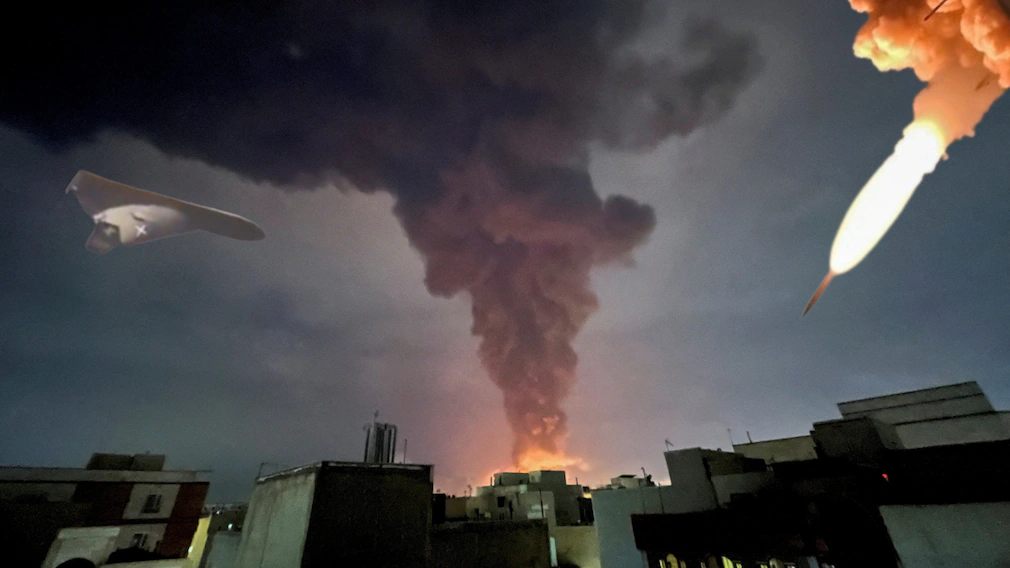
Iran has signalled a major shift in its military strategy in the ongoing conflict with the United States and Israel, announcing that it will now deploy missiles carrying warheads of 1,000 kilograms or more.
According to Lebanese broadcaster Al Mayadeen, Majid Mousavi of the Islamic Revolutionary Guard Corps said the new approach would intensify attacks on American and Israeli military targets as well as key regional infrastructure.
The move marks a new tactical phase for Iran. Instead of relying mainly on waves of low-cost drones and smaller missiles designed to overwhelm air defence systems, Tehran may now focus on fewer but far more destructive missile strikes capable of penetrating heavily defended targets such as airbases and underground command centres.
Military analysts say the shift changes the “economics of war.” Geopolitical analyst Shanaka Anselm Perera noted that using heavier warheads significantly increases the destructive radius of each strike, making interception failures far more costly.
Iran already possesses one of the largest missile arsenals in the Middle East. Among its key systems are the Soumar cruise missile, the Sejjil medium-range ballistic missile, and the Khorramshahr missile, which is believed to carry payloads of up to 1,800kg and reach distances of 2,000–3,000 kilometres.
Earlier in the conflict, Iran attempted to stretch US and allied air defences by launching large numbers of Shahed-131 and Shahed-136 drones, forcing expensive interceptor missiles to be used against relatively cheap aerial threats.
Intercepting these projectiles is costly. A Patriot missile interceptor can cost about $4 million, while a THAAD interceptor may cost around $12 million. By contrast, a Shahed drone costs roughly $50,000 to produce.
Recent attacks suggest Iran is now combining both strategies — using drone swarms alongside heavier ballistic missiles such as the Kheibar Shekan and Khorramshahr, some capable of travelling at speeds of up to Mach 8 and equipped with manoeuvrable re-entry vehicles that make interception more difficult.
Experts warn that if missiles carrying one-ton warheads are used regularly, the stakes of each interception attempt will rise dramatically. Even a single missile that slips through defence systems could cause far greater damage than earlier strikes.
News Source : Information for this article was gathered from a variety of reliable news outlets.