

Incredible Discovery: Over 110 Ancient Megaliths Unearthed in Kerala
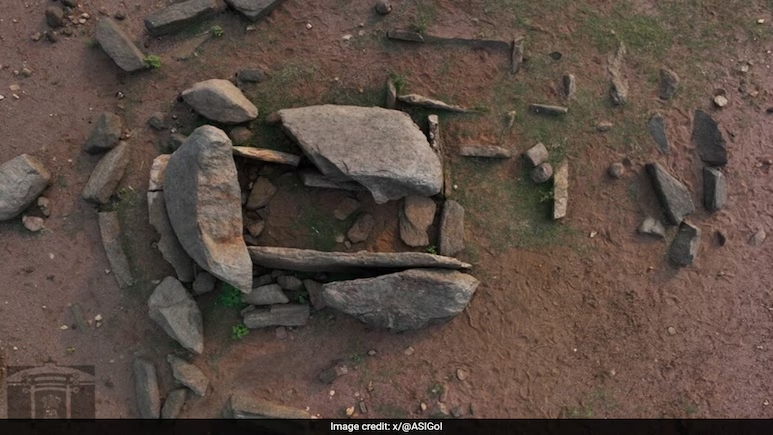
In a remarkable archaeological breakthrough, experts have uncovered more than 110 megalithic structures near the Malampuzha dam in Palakkad, Kerala. The discovery, made during a recent survey by the Archaeological Survey of India (ASI), is expected to offer new insights into the early Iron Age society and its belief systems in the region.
Sharing the findings on X, ASI revealed that these ancient burial sites are spread across 45 hectares of land, resting on island-like mounds. The megaliths are primarily built with massive granite slabs and boulders, while some also incorporate laterite stones. Among the different types of burials found, there are single and multiple-chambered cists, stone circles, urn burials, dolmens, and dolmenoid cists.
This discovery follows another significant find by ASI in Andhra Pradesh’s Lankkamala Reserve Forest, where archaeologists unearthed ancient inscriptions and rock art believed to date back to the Megalithic (Iron Age) and early historic periods (2500 BCE–2nd century CE). The rock paintings, created using natural materials like red ochre and animal fat, depict animals, human figures, and geometric patterns, offering a glimpse into the artistic expressions of early civilizations.
The inscriptions, dating between the 4th and 16th centuries CE, suggest that Lankkamala was a prominent Shaivite pilgrimage site visited by devotees from northern India. ASI’s survey in the rugged terrains of Nityapujakona, Akkadevatala Konda, and Bandigani Chella examined nearly 30 inscriptions, shedding light on the region’s cultural and historical significance.
With these recent discoveries, archaeologists continue to piece together India’s ancient past, offering a deeper understanding of its early societies, traditions, and artistic heritage.
News Source : “Information for this article was gathered from a variety of reliable news outlets.”