

For 1st Time In Years, Putin Says ‘Open To Direct Peace Talks’ With Ukraine
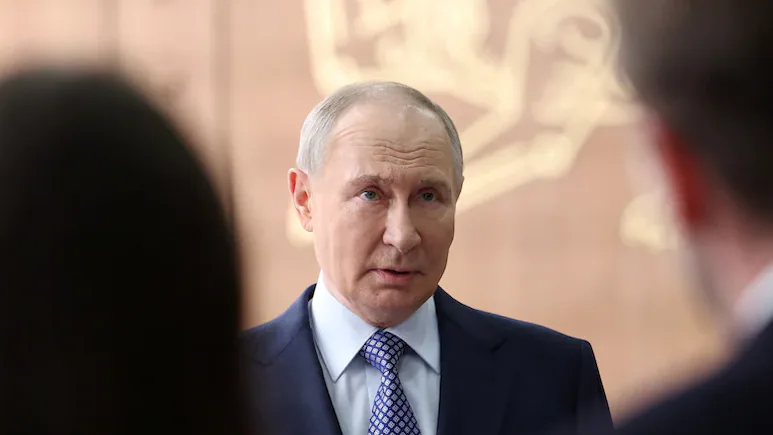
In a rare shift, Russian President Vladimir Putin has expressed a willingness to hold direct peace talks with Ukraine — the first such signal in years — as global pressure mounts to find a way out of the prolonged conflict. Speaking on Russian state television, Putin also indicated openness to further ceasefires after a short-lived Easter truce over the weekend.
His comments come amid increased diplomatic activity, with Ukrainian President Volodymyr Zelenskiy confirming that a delegation from Kyiv is heading to London this week for discussions with the United States and key Western allies. The talks follow recent meetings in Paris aimed at exploring possible routes to peace.
While Putin’s Easter ceasefire, which lasted just over 30 hours, was touted by Moscow as a goodwill gesture, both sides accused each other of violating the truce. Kyiv had initially dismissed it as a publicity stunt, noting continued Russian shelling even during the declared pause.
Zelenskiy has called for a more meaningful, 30-day ceasefire focused on protecting civilian areas. However, in a message shared on social media, he reaffirmed that Ukraine would match Russia’s actions on the battlefield — ceasefire for ceasefire, and strikes for strikes — emphasizing that “actions always speak louder than words.”
Kremlin spokesperson Dmitry Peskov clarified that Putin’s mention of avoiding civilian targets implied potential bilateral negotiations with Ukraine. Yet, Zelenskiy made no direct reference to Putin’s remarks in his latest statement, instead highlighting constructive talks with British Prime Minister Keir Starmer and reaffirming cooperation with the U.S., UK, and France.
“We are ready to move forward constructively, just as we have before, to achieve an unconditional ceasefire and, ultimately, real and lasting peace,” Zelenskiy wrote.
Meanwhile, the U.S. appears to be losing patience. President Donald Trump and Secretary of State Marco Rubio recently warned that American support for the peace process could wane if progress isn’t seen soon. Still, Trump struck a more hopeful tone on Sunday, saying a potential deal could be reached “this week.”
However, key sticking points remain. Russia continues to demand recognition of the territories it claims to have annexed and insists Ukraine must adopt a position of permanent neutrality — terms Kyiv considers unacceptable and equivalent to surrender.
Despite some diplomatic movement, the fighting hasn’t stopped. Ukrainian forces reported nearly 3,000 ceasefire violations over the weekend, particularly around the Pokrovsk frontline. Russia, for its part, claimed it had come under heavy fire, with over 900 drone attacks and hundreds of artillery strikes from Ukrainian forces.
Though none of these battlefield accounts have been independently verified, they underscore the fragile nature of any potential ceasefire and the long road ahead toward a comprehensive peace.
As both sides prepare for talks and international pressure builds, the world watches cautiously — hopeful, yet wary — for signs that words might finally turn into action.
News Source : Information for this article was gathered from a variety of reliable news outlets.