

Delhi Faces Diplomatic Dilemma As Afghan Taliban Minister Begins Historic India Visit
New Delhi:
Afghanistan’s UN-sanctioned Foreign Minister, Amir Khan Muttaqi, has arrived in India for a week-long visit — marking the first official trip by a senior Taliban leader since the group regained control of Afghanistan in 2021 after the withdrawal of US-led forces.
Muttaqi’s visit, permitted after the UN Security Council granted him a travel waiver, is expected to include meetings with India’s External Affairs Minister S. Jaishankar and National Security Advisor Ajit Doval. The high-profile visit comes at a delicate time for regional diplomacy, as New Delhi explores ways to cautiously engage with the Taliban regime while balancing international and domestic considerations.
The Flag Conundrum
However, the visit has presented Indian officials with an unexpected diplomatic problem — the issue of flags.
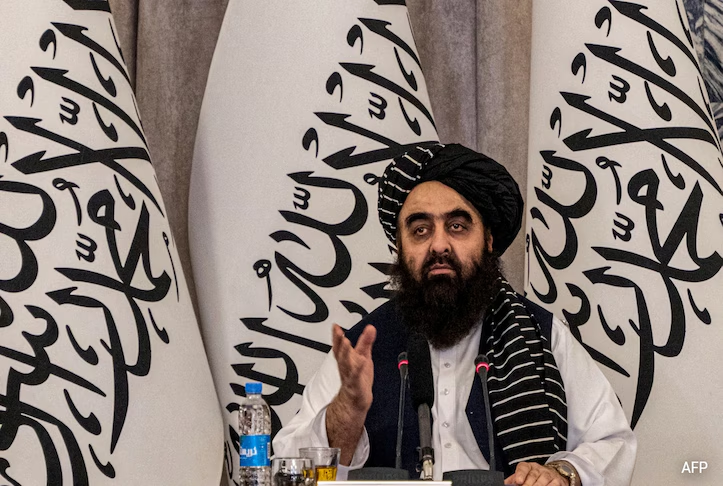
By protocol, during bilateral meetings, the flag of the visiting nation is displayed alongside India’s tricolour. But India does not officially recognise the Taliban government, nor does it acknowledge the white Taliban flag inscribed with the Islamic declaration of faith (shahada).
Until now, the Taliban flag has not been allowed to fly at the Afghan Embassy in New Delhi, which still displays the black-red-green tricolour of the former Islamic Republic of Afghanistan led by Ashraf Ghani.
In previous informal meetings, such as Foreign Secretary Vikram Misri’s meeting with Muttaqi in Dubai earlier this year, Indian officials sidestepped the issue by displaying no flags at all. But this time, with meetings set to take place in New Delhi, the matter poses a more complex diplomatic challenge.
Why The Visit Matters
India and Afghanistan historically shared strong relations, but ties were disrupted after the Taliban takeover in 2021, prompting New Delhi to close its embassy in Kabul. A year later, India reopened a limited mission to facilitate humanitarian assistance, trade, and medical support.
While India has not formally recognised the Taliban regime, it has gradually resumed communication through backchannel diplomacy and working-level talks. Muttaqi’s trip could signify a cautious expansion of that engagement.
The visit also follows a phone call between Muttaqi and EAM Jaishankar in May, after Operation Sindoor, when the Taliban condemned the terror attack in Pahalgam. In January, the Taliban regime referred to India as an “important regional and economic power” after talks between Muttaqi and Foreign Secretary Misri.
Recently, India joined Russia, China, and several other nations in opposing the establishment of foreign military infrastructure in Afghanistan — a response to US President Donald Trump’s suggestion that the Taliban hand over the Bagram airbase to US forces.
A joint statement from these countries reaffirmed support for integrating Afghanistan into regional connectivity initiatives and emphasised that Afghan soil must not be used for any form of terrorism.
Muttaqi’s presence in Delhi — amid this evolving geopolitical landscape — underscores India’s balancing act: engaging with Kabul’s rulers pragmatically, without granting them full diplomatic legitimacy.
News Source : Information for this article was gathered from a variety of reliable news outlets.