

Debate Rages Over Air India Crash: Deliberate Action or Mechanical Flaw?
New Delhi:
The preliminary investigation report from India’s Aircraft Accident Investigation Bureau (AAIB) into the deadly Air India crash on June 12, which claimed 260 lives, has ignited a heated debate in aviation circles. At the heart of the controversy is whether the fuel switches on the Boeing 787 Dreamliner were manually turned off by one of the pilots or shut down due to a technical fault.
Was It Intentional?
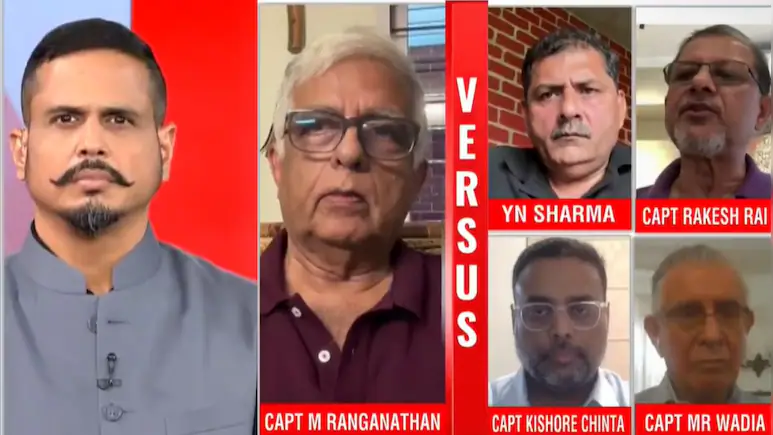
Veteran pilot and aviation safety expert Captain Mohan Ranganathan claimed on NDTV that the fuel cutoff switches could only have been moved manually, calling it a “deliberate act.” He cited the FAA’s previous advisory noting the switches can’t simply “slide back” on their own, suggesting manual intervention was required.
Ranganathan insisted that he wasn’t suggesting sabotage, but highlighted that one of the pilots had a medical history, and he demanded the full cockpit voice recorder (CVR) transcript be released.
Expert Pushback
Other aviation professionals pushed back strongly:
- Captain Rakesh Rai, an experienced Dreamliner pilot, dismissed the “manual intervention” theory. He pointed out that modern aircraft can electronically shut off fuel supply due to software commands, even if the fuel switches remain in the “RUN” position.
- He further questioned why only two lines of cockpit dialogue were included in the report: “Why did you cut off?” and “I didn’t.”
- Captain Kishore Chinta, from Sirius India Airlines, said assuming intent was “absurd”, and emphasized the lack of timestamped data and a full CVR transcript as crucial missing elements.
Technical Theories
Experts also discussed the deployment of the Ram Air Turbine (RAT) — a sign that engine failure occurred shortly after takeoff — and the squat switch, a sensor that prevents landing gear from retracting while the aircraft is still on the ground.
Captain MR Wadia, president of the Federation of Indian Pilots, said the squat switch explains why the gear didn’t retract, and argued against the suicide theory, saying the evidence so far doesn’t support such a narrative.
Conflicting Interpretations
According to the AAIB, both engine fuel switches went from “RUN” to “CUTOFF” within one second of each other. Later, the switches were moved back to “RUN” just before the Mayday call was issued. This sequence, say some experts like YN Sharma (CEO, Chimes Aviation), supports the idea that the switches were physically moved, not electronically toggled.
He emphasized the need to release the full Flight Data Recorder (FDR) and CVR transcripts, especially since the Wall Street Journal published a related article nearly a full day before the AAIB report was released, raising concerns about leaks and media spin.
Who Benefits From the Narrative?
Captain Chinta raised a broader concern: “Who gains from this narrative?” He suggested that blaming the pilots could shift liability away from manufacturers and reduce insurance payouts, pointing to financial motives behind certain conclusions.
The AAIB noted an FAA advisory from 2018 that flagged a known flaw in fuel switch design, but Air India never carried out the recommended inspections. Still, Boeing and the FAA have stated the issue does not meet the threshold for an Airworthiness Directive.
The Human Cost
Only one passenger, seated in 11A, survived the crash. The families of the 260 victims continue to demand transparency and accountability as questions around the cause — human error, suicide, mechanical failure, or software flaw — remain unanswered.
News Source : Information for this article was gathered from a variety of reliable news outlets.