

California’s Lost Lake Returns After 130 Years, Flooding Farmland and Reviving History
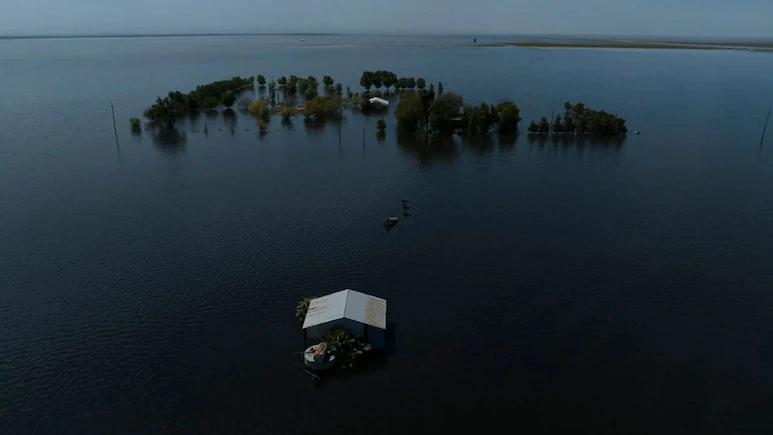
In a powerful twist of nature, Tulare Lake—once the largest freshwater lake west of the Mississippi—has reappeared in California’s San Joaquin Valley after vanishing for over 130 years. Triggered by the massive snowmelt from the Sierra Nevada mountains and the atmospheric rivers that swept across the state in 2023, the lake has returned, submerging nearly 94,000 acres of farmland and transforming the region’s landscape.
Known to the Indigenous Tachi Yokut people as Pa’ashi, Tulare Lake once stretched over 100 miles long and 30 miles wide. In the late 1800s, it supported steamship routes from Bakersfield to San Francisco, carrying crops and goods across a now-dry basin. But colonial-era irrigation systems drained the lake, transforming it into fertile agricultural land at the expense of the ecosystem and Indigenous lifeways.
Vivian Underhill, an environmental researcher formerly at Northeastern University, described the lake’s dramatic reappearance as a moment that forces reflection on historical water mismanagement. For the Tachi Yokut and others connected to the land, the return of Pa’ashi is both a crisis and a reckoning—disrupting modern agriculture but also reigniting conversations about environmental justice and restoration.
As fields flood and communities adapt, Tulare Lake’s revival serves as a powerful reminder that nature remembers—and sometimes returns.
News Source : Information for this article was gathered from a variety of reliable news outlets.