

“Amid Global Tensions, Xi Jinping Strengthens Ties with Vietnam, Calls for Unity Over Trade Wars”
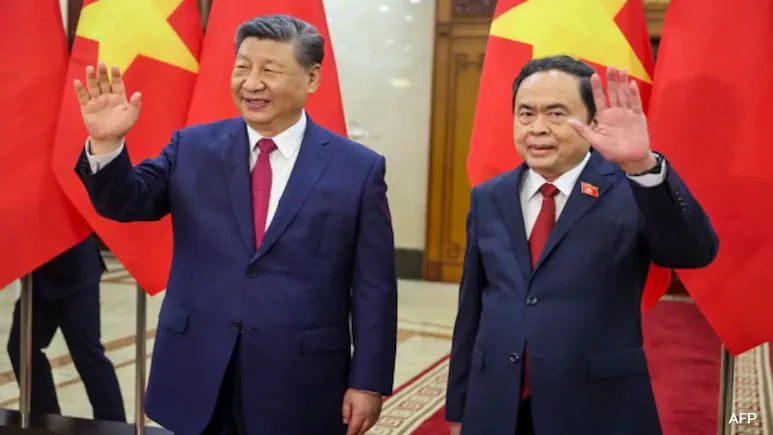
In a significant diplomatic gesture aimed at boosting regional unity and economic cooperation, Chinese President Xi Jinping arrived in Vietnam on Monday, marking the beginning of a Southeast Asia tour at a time when global trade tensions are on the rise.
Xi’s visit to Hanoi began with full ceremonial honors, including a 21-cannon salute and a warm welcome from Vietnamese officials and schoolchildren waving flags. The trip comes as China seeks to position itself as a dependable global partner, especially in contrast to what Beijing views as growing unpredictability from the United States.
The two countries, both led by communist parties, signed around 40 cooperation agreements during Xi’s visit—though details remain under wraps. Expected areas of collaboration include trade, aviation, and other key economic sectors. This marks Xi’s first overseas trip of the year and his first return to Vietnam since December 2023.
Xi’s visit follows a sharp escalation in global trade tensions, notably the U.S. imposing a 46% tariff on Vietnamese imports—a move that has since been paused but signaled broader uncertainty. Vietnam, one of Southeast Asia’s leading manufacturing hubs, counts the U.S. as its largest export market.
In an article published in Vietnam’s state-run Nhan Dan newspaper, Xi warned against protectionism, stating, “A trade war and tariff war will produce no winner, and protectionism leads nowhere.” He urged both nations to stand together in safeguarding global supply chains and the multilateral trading system.
During a meeting with Vietnamese General Secretary To Lam, Xi emphasized that China and Vietnam are “standing at the turning point of history” and should move forward together. Lam echoed the sentiment in a government article, saying Vietnam remains committed to building deeper, more sustainable ties with China.
The partnership is not without its tensions. Despite strong trade relations, Vietnam has expressed concern over China’s aggressive stance in the South China Sea, a region claimed in part by both countries. Xi, however, reassured in his piece that disputes could be resolved peacefully through dialogue and mutual respect.
This visit highlights Vietnam’s carefully balanced “bamboo diplomacy” — a strategy aimed at maintaining positive ties with both China and the U.S., even as the rivalry between the two powers intensifies.
After Vietnam, Xi will continue his diplomatic outreach in Malaysia and Cambodia, countries that also play vital roles in China’s regional strategy. Malaysian officials see the visit as a step toward deepening trade relations, while Cambodia remains one of Beijing’s closest allies in Southeast Asia.
With his tour, Xi Jinping signals that China is ready to lead on trade and diplomacy in a region facing growing uncertainty, choosing cooperation over confrontation in a rapidly shifting world order.
News Source : Information for this article was gathered from a variety of reliable news outlets.