

Akshaye Khanna’s Chilling Portrayal of Aurangzeb in Chhaava Rewrites the Mughal Emperor’s Legacy
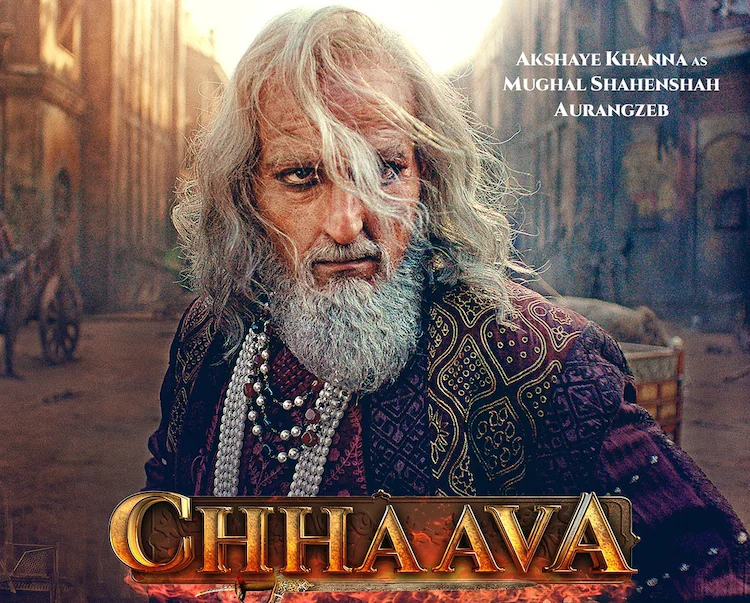
Akshaye Khanna’s portrayal of Mughal emperor Aurangzeb in Chhaava delivers a masterclass in restrained menace, offering a fresh perspective on one of Indian cinema’s most complex historical figures. His performance stands out in contrast to Vicky Kaushal’s dynamic energy, showing that power doesn’t always need to be vocal—sometimes, it’s all in the silence.
In Chhaava, Khanna’s understated performance as Aurangzeb is a sharp departure from the usual larger-than-life cinematic portrayals of the Mughal emperor. Rather than the usual fiery tirades or dramatic monologues, his portrayal is chillingly quiet, yet deeply commanding. The Mughal emperor, infamous for his ruthless path to power, is presented as calculating and cold, prioritizing kingship over kinship—a man who would not hesitate to eliminate family members in his pursuit of control.
Akshaye’s reserved performance provides a perfect counterbalance to Vicky Kaushal’s fiery portrayal of Chhatrapati Sambhaji Maharaj. In Chhaava, the portrayal of Aurangzeb isn’t that of a one-dimensional villain, but a complex character driven by strategy and calculated ruthlessness. His silence alone is enough to convey menace, as seen in a haunting scene where he silently munches on grapes, his chilling expression signaling an impending act of violence.
While many actors have attempted to portray Aurangzeb—each bringing their own interpretation of this controversial ruler—Khanna’s performance is uniquely impactful. The emperor’s decisions are subtle, but the consequences of his calculated actions are anything but. In a world where historical figures are often defined by grand gestures, Khanna’s Aurangzeb speaks volumes with just a look, crafting a portrait of power that lingers long after the credits roll.
Though Chhaava largely focuses on the bravery and valor of Sambhaji Maharaj, Khanna’s interpretation ensures that Aurangzeb isn’t reduced to just a tyrant. His performance proves that sometimes, the most fearsome rulers don’t need loud proclamations; their true power lies in their ability to simply be.
In a year where Aurangzeb has been revisited on screen by various actors, Akshaye Khanna’s version stands as one of the most compelling, quiet yet deeply impactful, reminding audiences that some of the most powerful characters in history leave an unforgettable impression—not through their words, but through their presence.
News Source : “Information for this article was gathered from a variety of reliable news outlets.”