

Donald Trump Proposes 15-Point Ceasefire Plan to Ease Iran Tensions — What We Know So Far
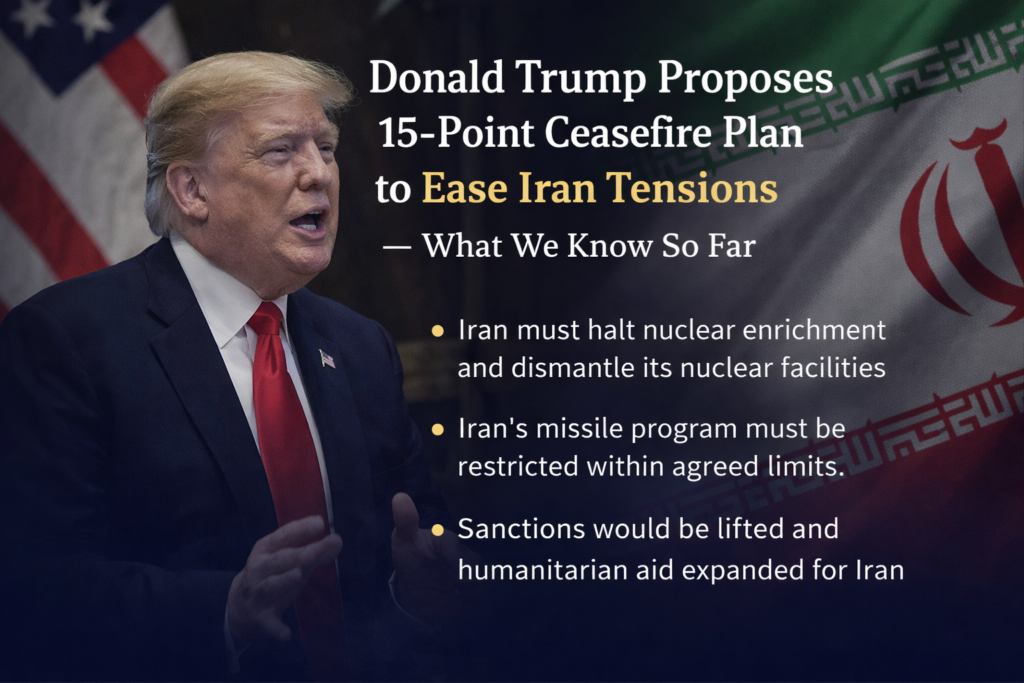
Amid rising tensions in the Middle East, former US President Donald Trump has reportedly put forward a detailed 15-point ceasefire proposal aimed at ending the ongoing conflict with Iran.
According to multiple reports, the proposal includes a temporary one-month ceasefire period. During this time, both sides would work toward a broader agreement covering key military, nuclear, and regional issues. The plan is said to have been developed by Trump’s close aides, including Jared Kushner and Steve Witkoff.
While there has been no official confirmation of the full document, reports from outlets like Channel 12 and The New York Times suggest that the proposal is comprehensive and addresses long-standing concerns between the two sides.
🤝 Early Signs of Talks
Just days before news of the plan emerged, Trump had hinted at “productive” discussions with Tehran and said he would hold off on attacking Iran’s energy infrastructure. Although Iran publicly denied formal negotiations, there are indications that preliminary communication channels are open.
Iran’s Foreign Minister Abbas Araghchi is reportedly in early-stage contact with US envoy Steve Witkoff. However, some reports suggest Iran may prefer negotiating with US Vice President J. D. Vance instead, reflecting trust issues with Trump’s inner circle.
📜 Key Points of the Ceasefire Proposal
What the US is asking from Iran:
- Iran would need to completely dismantle its nuclear programme and commit to never developing nuclear weapons.
- Uranium enrichment inside Iran would be banned.
- Existing enriched uranium stockpiles would be handed over to the International Atomic Energy Agency.
- Major nuclear facilities like Fordow, Natanz, and Isfahan would be shut down.
- Iran would have to allow full international inspections and transparency.
- It would also be required to stop funding and supporting regional proxy groups.
- Restrictions would be placed on Iran’s missile programme, including limits on range and production.
- The Strait of Hormuz must remain open for global trade.
What Iran could gain in return:
- Full removal of international sanctions.
- US support in developing a peaceful civilian nuclear programme, including energy generation.
- Removal of the “snapback” sanctions mechanism, which allows penalties to return automatically if agreements are violated.
One of the 15 points has not yet been publicly disclosed, and full details of the draft remain unclear.
🌍 A Fragile Opportunity
While this proposal could mark a potential breakthrough, it comes against a backdrop of deep mistrust. Previous negotiations broke down following joint military actions by the US and Israel, making any agreement difficult.
Still, the plan suggests that both sides may be exploring a path toward de-escalation. Whether this leads to lasting peace or remains a diplomatic attempt will depend on how talks unfold in the coming weeks.
News source: Information for this article was gathered from a variety of reliable news outlets.