

Philippines Declares Energy Emergency as Fuel Crisis Deepens Amid Middle East Conflict
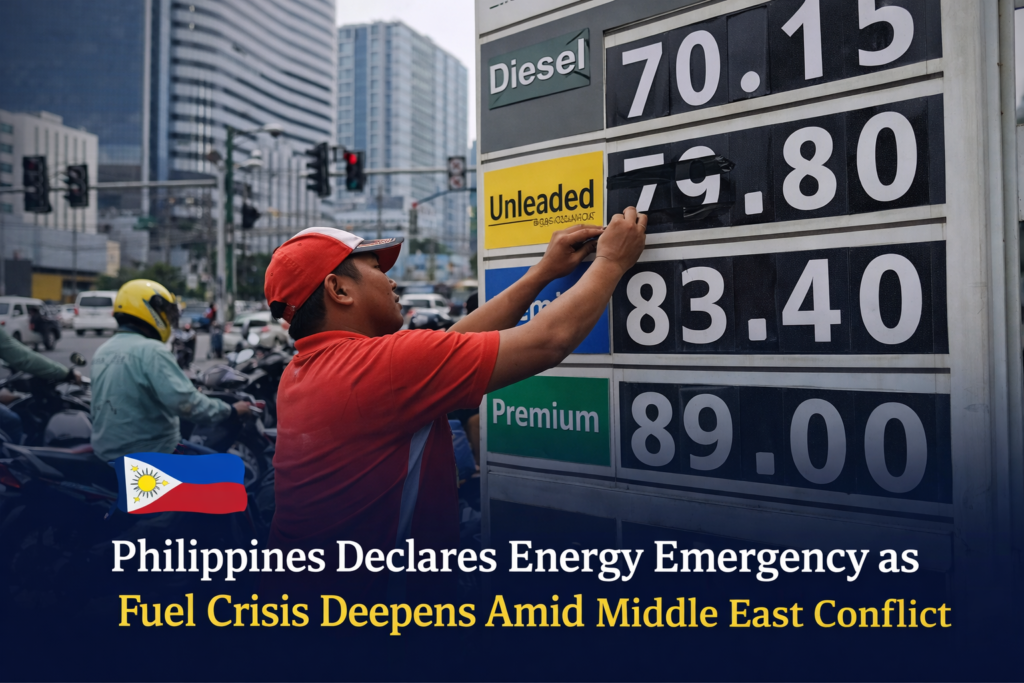
The Philippines is facing a serious energy crisis, prompting President Ferdinand Marcos Jr. to declare a national energy emergency. The move comes as the ongoing tensions in Middle East continue to disrupt global oil supplies and drive prices higher.
In a recent executive order, Marcos warned of an “imminent danger” of fuel shortages, stressing the need for urgent action to keep the economy running and ensure essential services are not affected. The country depends heavily on imported oil—about 98% of its supply comes from the Gulf—and as of March 20, it only had enough reserves to last around 45 days.
This marks the first time the Philippines has declared such an emergency since the COVID-19 crisis in 2020, when strict lockdowns were enforced. The current emergency will remain in place for up to a year unless lifted earlier.
Fuel prices have already surged, with petrol and diesel costs more than doubling since the conflict escalated on February 28. While the government has not introduced price caps or large-scale subsidies like some neighbouring countries, it has started offering financial support—around 5,000 pesos—to transport workers to help ease the burden.
To manage the crisis, the government plans to form a special committee that will oversee the supply of fuel and other essentials like food and medicines. Authorities have also directed energy agencies to prevent hoarding, conserve fuel, and secure additional supplies, even allowing state firms to make advance payments for oil purchases.
Public transport and daily commuters are feeling the pressure. In response to rising costs and what they see as slow government action, transport groups have announced a two-day strike. Some cities are already offering free bus rides and considering extended rail services to help people cope.
Energy officials have also indicated that the country may temporarily rely more on coal-powered plants, as liquefied natural gas becomes too expensive. Meanwhile, the government is exploring deals with countries like China and Russia, and is also in talks with the United States to secure fuel supply options—even from sanctioned nations if possible.
The crisis is also raising concerns about air travel. Officials have warned that jet fuel shortages could potentially ground flights in the coming months, although airlines say they have enough supply for now.
Beyond energy, the government is working to protect citizens abroad, especially the millions of Filipinos living in the Middle East, by preparing evacuation and support plans if needed.
While some business leaders have supported the emergency declaration as a necessary step, critics argue that it does not address deeper structural issues behind the country’s dependence on imported fuel.
As the global situation remains uncertain, the Philippines is bracing for a challenging period ahead—balancing economic stability, energy security, and the everyday needs of its people.
News source: Information for this article was gathered from a variety of reliable news outlets.