

Middle East Conflict Deepens as Strikes Intensify and Global Tensions Rise
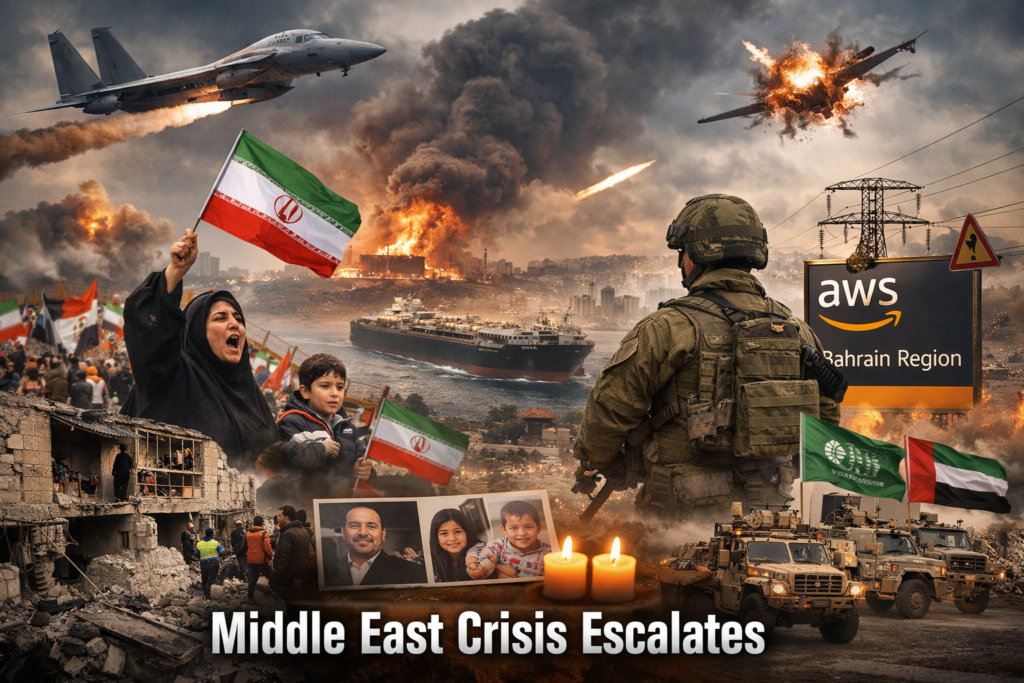
The ongoing conflict between the United States, Israel, and Iran is becoming more intense with each passing day, spreading across multiple regions in the Middle East. Continuous airstrikes, missile attacks, and rising casualties have made the situation increasingly unstable and uncertain. While the United States has hinted at the possibility of diplomatic talks, Iran has strongly denied any such negotiations, highlighting the deep mistrust between the two sides.
The effects of the conflict are no longer limited to the battlefield. Global oil prices are fluctuating, and concerns are growing over potential disruptions in key trade routes like the Strait of Hormuz. These developments are putting pressure on economies worldwide and forcing countries to reconsider their strategies.
In a concerning development, Amazon confirmed that its cloud service, AWS, faced disruptions in Bahrain due to nearby drone activity. The company is now working to shift affected customers to other regions to minimize impact.
On the ground, violence continues to affect civilian life. In Lebanon, Israeli strikes have resulted in casualties and injuries, while several Gulf countries like Saudi Arabia and Kuwait have activated air defence systems following missile and drone threats. Reports also suggest that Saudi Arabia and the UAE are moving closer to supporting military action against Iran, although they have not yet directly entered the conflict.
Iran, on the other hand, claims it is responding through a series of missile and drone strikes targeting Israeli locations and US-linked bases, calling its actions part of a broader retaliation strategy.
The human cost of the war is rising sharply. Iran’s reported death toll has crossed 1,500, while casualties have also been recorded in Israel, US forces, and other affected regions. Civilian displacement, especially in areas like Lebanon and parts of Iran, is increasing, putting additional strain on already fragile systems.
Despite the dangers, pro-government rallies have taken place in Tehran, where citizens gathered to show support for their leadership.
Beyond the region, countries like South Korea are already feeling the economic impact, introducing measures to control fuel usage and manage rising costs due to disruptions in global energy supply.
Overall, the conflict is not just a regional crisis anymore—it is rapidly turning into a global concern, affecting economies, security alliances, and everyday lives across the world.
News source: Information for this article was gathered from a variety of reliable news outlets.