

Kim Jong Un Wins 99.93% Vote in North Korea Poll – But the Tiny ‘No’ Vote Tells a Story
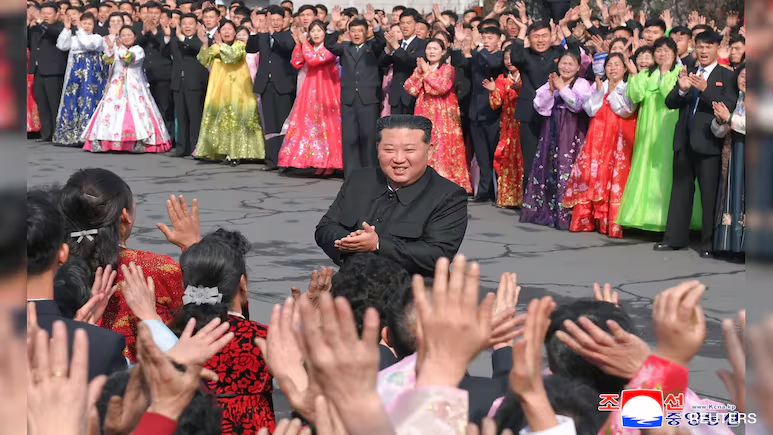
In a result that surprised no one but still raised eyebrows, North Korean leader Kim Jong Un has once again secured an overwhelming victory in the country’s latest parliamentary elections, winning 99.93% of the vote.
The election, held on March 15 to choose members of the 15th Supreme People’s Assembly, saw candidates backed by the ruling Workers’ Party of Korea sweep every single seat. According to state-run Korean Central News Agency (KCNA), voter turnout was nearly absolute, reported at an extraordinary 99.99%.
But what caught attention this time wasn’t just the massive win—it was the tiny fraction of votes that went the other way.
With no opposition candidates allowed on the ballot, voters in each constituency were presented with just one pre-approved name. Their only choice was simple: approve or reject. That means the remaining 0.07% of votes didn’t go to any rival leader or party—they were cast as rare “no” votes against the system’s chosen candidates.
Interestingly, this is the first time in decades that North Korean state media has openly acknowledged such dissent, something not publicly admitted since 1957.
Officials claimed that only a minuscule number of voters failed to participate, mostly due to being abroad or at sea, while an even smaller fraction abstained entirely.
The assembly itself includes 687 representatives from across society—workers, farmers, military personnel, and officials. However, every candidate is vetted and approved in advance by the ruling establishment, ensuring there is no real electoral competition.
Kim Jong Un has been in power since 2011, following the death of his father, Kim Jong Il. Over the years, his authority has only grown stronger, especially after constitutional changes in 2019 that formally cemented his position as the country’s supreme leader with near-total control over the state, military, and government.
While the numbers project unity, the small sliver of “no” votes—however tiny—offers a rare glimpse into silent dissent within one of the world’s most tightly controlled political systems.
News Source : Information for this article was gathered from a variety of reliable news outlets.