

Trump Credits India, Pakistan Leaders For Ending Conflict, Steps Back From Ceasefire Claim
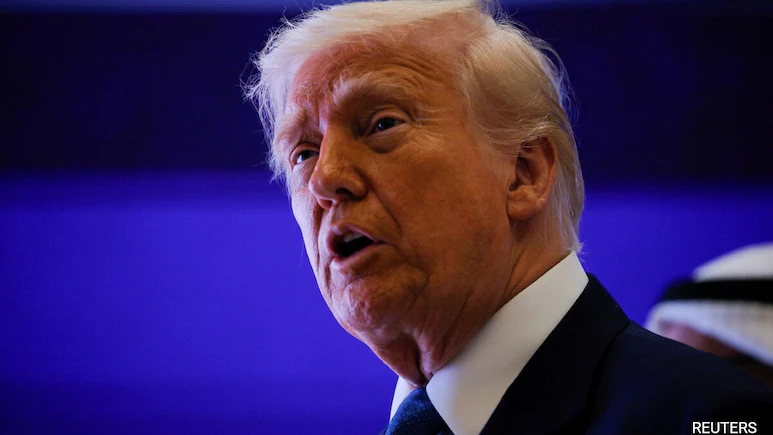
In a significant shift from his earlier assertions, US President Donald Trump has now credited the leaders of India and Pakistan for de-escalating the May 7–10 military conflict, rather than claiming personal credit for brokering the ceasefire as he had done multiple times over the past few weeks.
Speaking after a rare luncheon meeting with Pakistan’s Army Chief, Field Marshal Asim Munir, at the White House, Trump said, “Two very smart leaders made the right decision to stop the war. I want to thank both Prime Minister Modi and General Munir for their actions.”
The luncheon, unusual in nature due to the high-level military representation rather than a civilian leader, took place amid rising tensions in the Middle East, particularly the Iran-Israel standoff. According to sources, the meeting focused not only on South Asian issues but also on the possibility of US strategic access to military infrastructure in Pakistan should Washington decide to take military action against Iran.
Trump, who was joined by Secretary of State Marco Rubio and Middle East envoy Steve Witkoff, expressed admiration for Modi and reiterated his interest in forging strong trade partnerships with both India and Pakistan. “We are working on a trade deal with India. We are working on one with Pakistan too,” he said.
The Pakistan delegation included National Security Advisor Lt. Gen. Asim Malik, who also heads the country’s intelligence agency, ISI. Ahead of the meeting, Munir had called for Trump to be nominated for the Nobel Peace Prize, citing the US President’s role in “averting a nuclear war” between India and Pakistan. However, Trump did not repeat his earlier claims of direct mediation following the meeting, a notable departure from his usual rhetoric.
In a phone conversation the previous night, Prime Minister Modi reportedly clarified to Trump that the de-escalation was a result of direct military dialogue between India and Pakistan, not foreign mediation. India had launched Operation Sindoor on May 7 in response to the Pahalgam terror attack, targeting terror camps across the border. The hostilities lasted four days and ended on May 10 following bilateral military communications.
Trump acknowledged that both nations, being major nuclear powers, showed restraint at a critical time. “It could’ve escalated into a nuclear war,” he said. “I’m glad it didn’t.”
The Pakistan Army later issued a statement highlighting Trump’s interest in deepening ties with Pakistan across various sectors including trade, artificial intelligence, energy, and emerging technologies. The statement also quoted Munir expressing gratitude to Trump for his “constructive role” in maintaining regional peace and praised the ongoing US-Pakistan cooperation in counter-terrorism.
Discussions also touched upon the escalating Iran-Israel tensions. Trump acknowledged Pakistan’s unique strategic perspective, saying, “They know Iran very well, maybe better than most.”
Munir extended an invitation to President Trump to visit Pakistan in the near future.
Though rare, there have been historical precedents of Pakistani army chiefs being hosted by US Presidents—most notably Ayub Khan, Zia-ul-Haq, and Pervez Musharraf—during times when they held dual roles as military and civilian heads of state. However, Trump’s formal lunch with a serving army chief, without any accompanying civilian leadership, marks a significant diplomatic gesture.
News Source : Information for this article was gathered from a variety of reliable news outlets.