

“Seat 11A Saved Me”: The Miraculous Tale of the Sole Survivor of Air India’s Deadliest Crash
New Delhi:
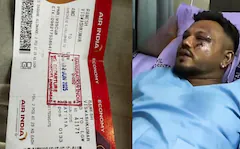
In the horrifying aftermath of India’s worst single-aircraft disaster in decades, one man emerged from the wreckage alive—bloodied, burned, but breathing. His name is Vishwash Kumar Ramesh, a 40-year-old British-Indian businessman, and he was sitting in seat 11A.
Air India flight AI-171, a Boeing 787-8 Dreamliner bound for London Gatwick, crashed just seconds after takeoff from Ahmedabad’s Sardar Vallabhbhai Patel International Airport on Thursday afternoon. The plane clipped a multi-storey hostel housing medical students from BJ Medical College and exploded into flames.
A total of 241 lives were lost—229 passengers, 12 crew members, and five students on the ground. The only one who walked out alive was Mr. Ramesh.
“I Thought I Was Going To Die”
Speaking from his hospital bed at Ahmedabad Civil Hospital, Mr. Ramesh recalled those terrifying moments. “Everything happened right before my eyes. I thought I was going to die,” he told Doordarshan, just hours after being visited by Prime Minister Narendra Modi.
He was seated in 11A, a window seat near the front of the economy cabin, just behind business class and close to an emergency exit. His brother, seated across the aisle in 11J, did not survive.
What Happened In Those Final Seconds
According to air traffic control records, the plane took off from runway 23 at 1:38 pm. All appeared normal for a few seconds, until the pilot radioed a Mayday call. Witnesses near the airport said they heard an odd engine noise before the aircraft plunged nose-first into the hostel’s southern wing.
The aircraft was piloted by Captain Sumeet Sabharwal, a highly experienced Line Training Captain with over 8,000 hours of flight time, and First Officer Clive Kundar, who had logged around 1,100 hours.
The Survival of Seat 11A
In a twist of fate, the section where Mr. Ramesh sat broke off from the main body of the aircraft and crashed into the lower level of the building—avoiding the full force of the explosion and fire.
“There was some space near my side. The door must have broken on impact,” he said. “I saw the opening and just ran. I don’t know how, I just ran.”
The opposite side of the plane, which struck a concrete wall, was completely destroyed and engulfed in fire. No one from that section made it out.
Photos from the scene confirm his account: the forward fuselage, where he was seated, separated on impact and partially survived the flames—creating a narrow escape path.
“I unbuckled my seatbelt and jumped out. I saw the air hostess and some older passengers… they didn’t make it. It all happened so fast,” he added, still in disbelief.
In The Hospital, Under Watch
Mr. Ramesh is now being treated in Ward B7, Bed 11, under 24/7 medical care and guarded by personnel from the Gujarat ATS and crime branch. Prime Minister Modi, who rushed to Ahmedabad early Friday, visited both the crash site and Mr. Ramesh in hospital.
“He asked me what happened. I just told him—I don’t know how I survived.”
A Rare Miracle in Aviation History
His survival has drawn comparisons to other “lone survivor” aviation tragedies. In 1987, four-year-old Cecelia Cichan survived a crash in Detroit. In 2009, Bahia Bakari, a 12-year-old girl, was the only survivor of a plane crash off the Comoros Islands. And in 2006, Jim Polehinke, the co-pilot of Comair Flight 5191, was the sole survivor of a Kentucky crash.
Now, Vishwash Kumar Ramesh of Seat 11A joins that extraordinary list—living proof that sometimes, amid unspeakable tragedy, fate chooses one.
News Source : Information for this article was gathered from a variety of reliable news outlets.