

Waqf Bill Passed By Rajya Sabha With 128 Votes For, 95 Against
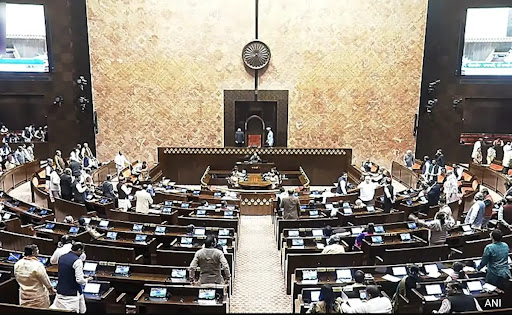
New Delhi: The Waqf Amendment Bill, after a smooth passage through the Lok Sabha, cleared the Rajya Sabha with a vote of 128 in favor and 95 against. The debate, spanning several hours, saw sharp exchanges as the bill’s implications on Waqf properties, minority rights, and governance were hotly contested.
A last-minute decision by Naveen Patnaik’s Biju Janata Dal (BJD) to allow a “conscience vote” gave its seven Rajya Sabha MPs the freedom to vote as they saw fit. BJD leader Sasmit Patra, in a social media post, explained that the party considered the sentiments of various minority communities before making this decision.
The Key Debate Points
The discussions largely followed expected lines. Union Minister Kiren Rijiju, defending the bill, dismissed concerns that it would harm Muslim interests. He emphasized that non-Muslims would not be allowed to interfere in Waqf management, and that the bill was aimed at curbing corruption. One of the major changes requires proof of ownership before any property is declared Waqf, preventing automatic transfers based on mere claims.
Union Minister Amit Shah highlighted several properties—ranging from a 400-year-old temple in Tamil Nadu to land for a luxury hotel—that had been designated as Waqf, questioning past practices.
Countering the government’s stance, Congress MP Syed Naseer Hussain argued that the properties being debated—such as burial grounds, mosques, and dargahs—were recognized Waqf assets historically handed over by the British during the construction of Lutyens’ Delhi. He also pushed back against the claim that people couldn’t challenge Waqf Board decisions in court, pointing to numerous pending cases in higher courts.
A sharp exchange ensued between Hussain and Amit Shah, with Shah asserting that the 2013 Waqf Act lacked provisions for civil suits, limiting legal recourse for those aggrieved by Waqf Tribunal decisions.
Speaking in favor of the bill, Union Minister JP Nadda accused the opposition of politicizing the issue, stating that even Muslim-majority nations were modernizing their Waqf property systems with transparency and digitization.
However, Congress leader Mallikarjun Kharge warned that the bill could trigger disputes. He urged the government to reconsider, citing the Lok Sabha voting figures (288 in favor, 232 against) as evidence of division.
AIMIM’s Imtiaz Jaleel and Kharge both questioned the inclusion of two non-Muslim members in Waqf boards, pointing out that Hindu religious trusts like Tirupati Temple Trust do not have non-Hindu members.
What’s Next for the Bill?
The bill, having passed both houses of Parliament, now awaits the President’s approval before becoming law.
Why is the Bill Controversial?
Key provisions sparking opposition include:
Mandatory inclusion of two non-Muslim members in the Central Waqf Council and Waqf Boards.
Restriction on donations, allowing only those who have practiced Islam for at least five years to donate Waqf properties. Critics argue this discriminates against converts and restricts religious freedom.
Government intervention in Waqf property disputes—previously handled by Waqf Tribunals—will now be overseen by senior government officials, with the final decision resting with them.
Opposition parties and sections of the Muslim community view these changes as an attempt to dilute Waqf autonomy and increase government control over its properties. The debate surrounding this legislation is unlikely to end soon, as legal challenges and political discourse around it continue to unfold.
News Source : “Information for this article was gathered from a variety of reliable news outlets.”