

Saudi Suspect in Deadly German Christmas Market Attack Was Reportedly Anti-Islam and Disillusioned with Migrant Policies
Magdeburg, Germany:
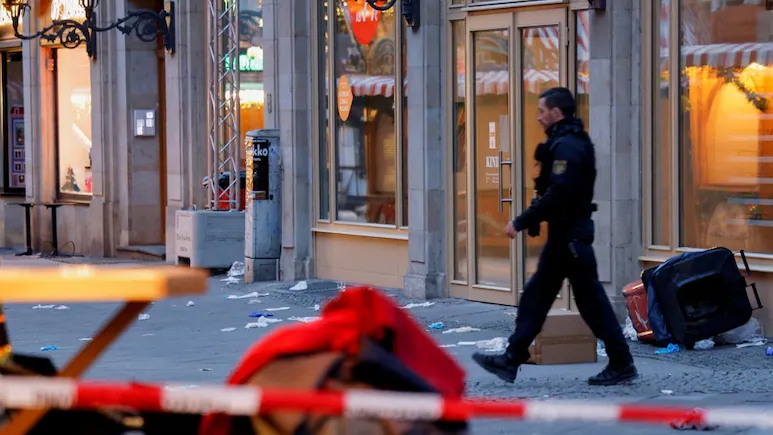
A tragic car-ramming incident at a Christmas market in Magdeburg, Germany, has left five people dead and 205 injured, including a nine-year-old child. The attack has shocked the nation, occurring just days before Christmas and eight years after a similar tragedy in Berlin.
Authorities have identified the suspect as Taleb al-Abdulmohsen, a 50-year-old Saudi psychiatrist and self-described atheist. Investigators say Abdulmohsen held strong anti-Islamic views and was deeply frustrated with Germany’s immigration policies, particularly its treatment of Saudi refugees.
Chancellor Olaf Scholz described the attack as “terrible and insane,” calling for national unity amidst growing political tensions over immigration and security. “It is not hatred that should define us but our commitment to a shared future,” Scholz said, laying flowers at the site with other officials.
A Complex Profile
Unlike previous attacks linked to jihadist motives, Abdulmohsen’s background and online posts depict a different narrative. An activist who had previously helped women flee Saudi Arabia, he expressed anger toward Islam and Germany’s perceived leniency toward refugees from predominantly Muslim nations.
Interior Minister Nancy Fraser labeled his views as “Islamophobic.” Abdulmohsen had previously posted troubling statements online, including one questioning whether justice could be achieved in Germany without violence.
Despite these warnings, a risk assessment conducted by German authorities last year concluded he posed no specific danger.
A Community in Mourning
Residents of Magdeburg have responded with an outpouring of grief. Outside the Johanneskirche church, mourners left flowers, candles, and children’s toys in memory of the victims. A memorial service and coordinated church bell ringing marked the time of the attack as the community sought solace.
Security has been heightened at Christmas markets across Germany, with increased police presence in major cities like Hamburg and Leipzig.
Broader Implications
The attack has intensified debates around immigration ahead of Germany’s February elections. Some fear it will bolster far-right sentiments, particularly in regions like eastern Germany, where the Alternative for Germany (AfD) party holds strong influence.
Alice Weidel, leader of the AfD, criticized the incident, calling for stricter immigration controls. Residents expressed mixed emotions, with some fearing a backlash against foreigners.
As Germany mourns the victims, the incident serves as a stark reminder of the challenges of fostering unity in the face of tragedy. “We must respond with the full force of the law,” Scholz vowed, emphasizing the importance of solidarity and compassion during these difficult times.
News Source : “Information for this article was gathered from a variety of reliable news outlets.”